
In traditional Western astrology, choosing a wedding date is not simply a matter of finding a pleasant Venus transit or avoiding Mercury retrograde. Marriage election is a specialized branch of electional astrology in which the astrologer selects the strongest available moment for the formal beginning of a union.
The emphasis is on the word moment. Two ceremonies held on the same day but several hours apart can produce very different electional charts because the Ascendant, house rulers, angles, and planetary house positions change throughout the day. A serious marriage election therefore looks for a suitable date and an exact time window rather than declaring an entire Saturday "lucky."
Start with the Natal Charts, Not the Wedding Calendar
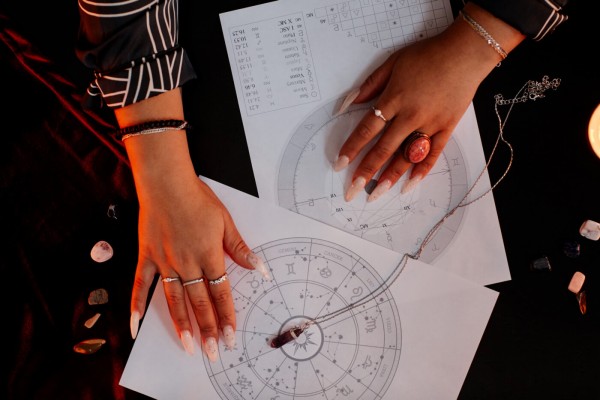
Classical electional astrology does not treat every favorable date as equally suitable for every couple. Traditional authors placed considerable importance on the natal charts of the people involved. A beautifully constructed election may still interact poorly with one partner's horoscope, while a date that looks less perfect in isolation can fit both charts surprisingly well.
This is why birth dates alone are not enough for a detailed marriage election. Exact birth times and birthplaces are highly desirable for both partners, together with the city where the ceremony will take place. Readers unfamiliar with the structure of an individual horoscope may first want to explore a personalized birth chart analysis before approaching electional timing.
There is also an important practical lesson here. Electional astrology cannot manufacture a flawless chart under unlimited conditions because real weddings have fixed venues, available weekends, family schedules, legal requirements, and travel arrangements. The task is to find the strongest chart within a realistic range of dates.
Venus Deserves Special Attention
Venus is the natural significator of love, attraction, agreement, pleasure, and marriage, so her condition carries particular weight in a wedding election. Traditional practice generally prefers Venus to be direct, reasonably dignified, free from serious affliction, and well connected with benefic planets.
Venus is traditionally strongest by sign in Taurus and Libra, which she rules, and in Pisces, where she is exalted. These placements are valuable, but they should not be turned into a rigid rule. A Venus in a strong sign can still be poorly placed by house or entangled in difficult aspects. Conversely, Venus in a less dignified sign may function adequately if the rest of the election is substantially stronger.
Venus retrograde is usually treated much more cautiously. In electional symbolism, retrogradation can suggest reversal, reconsideration, or difficulty expressing the planet's natural function directly. For an event intended to establish a partnership, many astrologers therefore exclude Venus retrograde periods early in the search.
The Moon Shows How the Event Develops
The Moon is one of the most important bodies in virtually every traditional election. She describes movement, unfolding circumstances, and the sequence through which the matter develops after it begins.
For weddings, a useful Moon should ideally be free from severe affliction and applying toward constructive planets or aspects. Particular attention is often paid to the Moon's next and final major aspects before leaving her sign. A Moon moving toward Venus or Jupiter by an easy aspect usually presents a more desirable symbolic sequence than one moving toward a hard contact with Mars or Saturn.
A void-of-course Moon is commonly avoided because it can describe a situation that fails to develop as intended. The traditional definition of void-of-course varies somewhat between schools, so this condition should be judged according to a consistent technique rather than a generic calendar.
The lunar phase also matters, although it should not automatically override everything else. A waxing Moon is often preferred for events intended to grow. Yet a good relationship between the Sun and Moon can be more valuable than selecting a fashionable Full Moon simply because it looks romantic in photographs.
The First and Seventh Houses Describe the Union
Marriage elections cannot be judged by planets alone. The structure of the houses is equally important.
The first and seventh houses represent the two sides entering the partnership. Their rulers should ideally have dignity, occupy constructive houses, and form supportive relationships. In traditional practice, an applying sextile or trine between these significators becomes especially interesting when reception is present - one planet receiving the other through its dignities.
The seventh house itself should also be protected from unnecessary affliction. Placing a strongly difficult planet directly on the Descendant simply to obtain a convenient ceremony time is rarely an attractive compromise.
Other angles matter as well. The tenth house can describe the public direction and standing of the marriage, while the fourth traditionally relates to the end or outcome of the matter. A strong wedding chart therefore has to work as a whole. Concentrating exclusively on the seventh house misses a large part of the election.
Do Not Judge Saturn and Mars Mechanically
Mars and Saturn are traditionally classified as malefics, but electional work is subtler than removing every difficult planet from the horoscope. That would often be impossible.
The priority is to prevent Mars and Saturn from seriously damaging the Moon, Venus, the Ascendant, the seventh house, or their rulers. Angular malefics deserve particular scrutiny because planets near the angles become prominent in the life of the chart.
Saturn can symbolize delay, coldness, separation, duty, or restriction when badly placed. Mars can indicate conflict, haste, irritation, or rupture. Yet context matters. A planet that is well dignified and appropriately integrated may behave differently from one that is weak, hostile to the principal significators, and placed directly on an important angle.
Mercury, Jupiter, and the Sun Still Matter
Jupiter is normally welcomed in marriage elections because of its traditional association with growth, generosity, protection, and prosperity. Helpful connections from Jupiter to the Moon, Venus, or important house rulers can improve an otherwise ordinary chart.
Mercury governs contracts, communication, coordination, paperwork, and logistics - subjects that are highly relevant to an actual wedding. Mercury retrograde is not universally treated as an absolute prohibition, but if several equally good dates exist, a direct and unafflicted Mercury is usually preferable.
The Sun represents vitality, purpose, authority, and the central life force of the chart. A constructive relationship between the Sun and Moon is particularly desirable. Strong luminaries give the election coherence, while severe afflictions involving both can outweigh a superficially attractive Venus placement.
Fixed Signs and the Question of Durability
Marriage is intended to endure, so classical electional doctrine often gives fixed signs special consideration. Taurus, Leo, Scorpio, and Aquarius are associated with stability and continuation. Placing a suitable fixed sign on the Ascendant can therefore reinforce the symbolism of permanence.
That does not mean that every wedding must have a fixed Ascendant. The ruler of the Ascendant still needs to be examined. A stable sign whose ruler is severely debilitated may be less useful than another sign producing a much stronger chart. Electional astrology is a hierarchy of priorities, not a checklist where every desirable feature has equal value.
Why the Exact Ceremony Time Matters
A common mistake is to choose an astrologically promising date and then allow the ceremony to begin whenever guests are ready. From an electional perspective, that can defeat the purpose of the exercise.
The Ascendant changes quickly, and a delay may move important planets into different houses or bring a malefic closer to an angle. The relevant starting moment should therefore be defined in advance. Depending on the type of ceremony and legal system, astrologers may use the exchange of vows, the moment both partners give formal consent, or the signing that legally establishes the marriage.
That moment should be realistically achievable. An election requiring everyone to perform a critical action within a two-minute interval is rarely useful. A slightly less perfect chart with a comfortable window can be far more practical.
When a Full Professional Election Is Too Expensive
A proper marriage election involving two natal charts is labor-intensive. Current professional rates vary widely, but individual electional consultations commonly fall around $100 - $300, with complex wedding work often priced toward the upper part of that range.
For couples who want a much cheaper preliminary analysis, Astromodus is worth considering. Its Best Time for Wedding analysis uses the birth information of both partners and examines electional factors such as Venus, the Moon, the ruler of the seventh house, planetary dignity, aspects, angles, retrogrades, and suitable hourly windows.
For a $2 analysis dealing with something as technically demanding as electional timing combined with two natal charts, the resulting recommendations are quite impressive, especially when compared with roughly $100 - $300 for an individualized astrologer's analysis. It should not be confused with a bespoke consultation in which an experienced astrologer manually weighs every exception, reception, natal interaction, and practical constraint, but it can serve as a useful budget option or a first screening of possible dates.
A Practical Order for Comparing Wedding Dates
- First: define the real range of possible dates, locations, days of the week, and ceremony hours.
- Second:remove periods with major problems, particularly Venus retrograde or clearly unsuitable lunar conditions.
- Third: examine the Moon's sign, aspects, course, and relationship with the Sun.
- Fourth: strengthen Venus and assess Jupiter, Mercury, Mars, and Saturn in context.
- Fifth: choose a workable Ascendant and judge its ruler together with the ruler of the seventh house.
- Sixth: inspect all four angles and avoid severe afflictions to the principal significators.
- Seventh:compare the strongest candidate elections with both natal charts before fixing the final ceremony time.